Food-processing industry

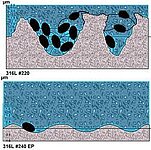
In the food industry, electropolishing has long proved its worth in terms of hygiene, ease of cleaning and the prevention of bacterial growth.

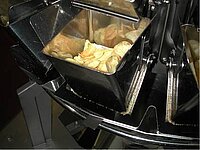
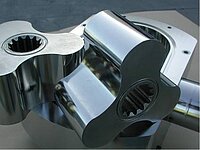
Filling hoppers, chutes and dosing systems used in the production of crisps, chips and croquettes are electrolytically polished. This ensures they can be cleaned efficiently and provides good resistance to the adhesion of fats and starch to their surfaces.
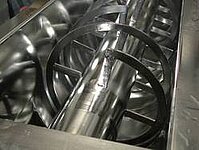
Conveyor screws and Archimedes screws show significantly less build-up after electropolishing.


Electrochemical polishing, combined with electrolytic de-blackening, prevents the problem of black discolouration when food comes into contact with stainless steel. (cauliflowers, tomatoes, potatoes, carrots, salsify, etc.) De-blackening is also used in fine chemicals (pure products), pharmaceuticals (tablets), microelectronics and clean rooms.

Cleaning and disinfection often impose additional requirements in terms of corrosion resistance. It is important that an electrolytically polished surface promotes flavour and colour stability in food products such as baby food, mayonnaise, flavourings and aromatics, tomato purée, yoghurt, egg products, meat preparations, protein products, chocolate processing, yeast, blood processing, breweries, citric acid, fruit juices, beer, coffee, etc. 
Any company committed to hygiene can benefit from electrolytic polishing. Taking into account the impressive reduction in cleaning costs, the investment in electrolytic polishing pays for itself immediately. 

Electrolytic deburring of ground blades for the food industry prevents metal particles from ending up in food products.

Electropolishing for the food industry produces a durable, resistant, non-flaking finish.

Benefits following treatment:

  • Colourfast & temperature-resistant

  • An excellent eco-friendly alternative to plastic coatings such as PTFE, etc.

  • Shorter CIP/SIP times (resulting in less waste)

  • Durable corrosion resistance. Treated AISI 304L offers better corrosion resistance than untreated AISI 316L, making it suitable for food applications (EHEDG – FDA – EN – ASTM – HACCP)

  • Process-friendly anti-stick & anti-adhesive properties. Improves dosing and mixing by reducing sticking

  • Taste, odour and colour neutral, as Cr₂O₃ is many times more difficult to dissolve than iron in acidic environments

Other advantages in specific applications:

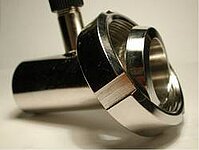
  • When bottling soft drinks, beer and other carbonated drinks, treated filling tubes have been shown to work well where ground versions cause the bottles to overflow. The deburring effect achieved through electrochemical polishing ensures that filling equipment operates more efficiently.

  • On the treated extruder heads used for ice cream, there is now hardly any butter formation at all

Recommended treatments: grinding to roughness, electropolishing and/or de-blackening, micro-deburring, pickling and passivation.