Electropolishing, electrolytic polishing, electrochemical polishing – A superior finish
The most commonly used austenitic stainless steel alloys contain iron, 18% chromium and 8 to 10% nickel. The rich elements chromium and nickel are responsible for the formation of the protective chromium oxide skin and the corrosion resistance of stainless steel.
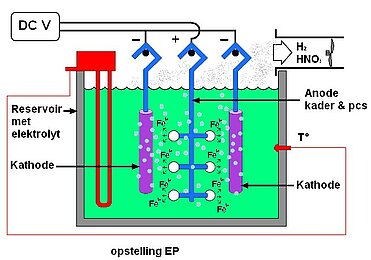
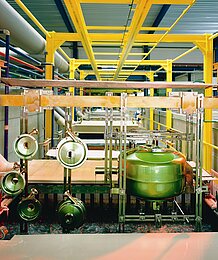
During electrolytic polishing, which is a anodizing process, the treated components are suspended anodically in the electrolyte baths. Under the influence of an electric current and bath chemicals, impurities and iron are dissolved into the solution.
This increases the percentage of chromium and nickel on the surface. The stainless steel becomes higher grade and acquires a much thicker (up to a factor of 100) and denser chromium oxide skin.
The benefits of an electrolytically polished surface are spectacular:
Significantly improved corrosion resistance, particularly in situations involving pitting and crevice corrosion.
Complete restoration of the austenitic structure.
High resistance to fouling and sticking.
Significantly improved cleanability.
An extremely hygienic and bacteriologically clean (aspectic) surface.
Smoother and denser surface, lower surface roughness, deburring.
Elimination of weld discolouration; high brillance.
Low electric resistance and good thermal performance.
Halving of the three-dimensional surface area.
Extremely passive and rich surface.