Electrolytic amorphisation
Metals, including stainless steel (inox), have a crystalline material structure. As a result, the surface may contain microscopic pores and irregularities in which contaminants can become trapped. This can promote corrosion and bacterial growth.
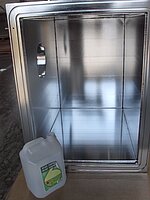
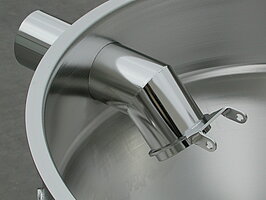
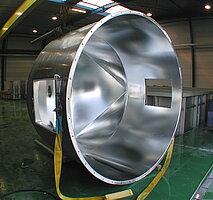
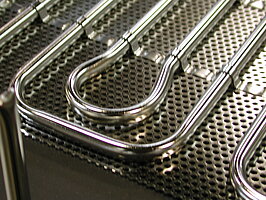
Electrolytic amorphisation removes the porous top layer and creates a smooth, closed and cell-free, hydrogen-rich ‘amorphous’ surface.
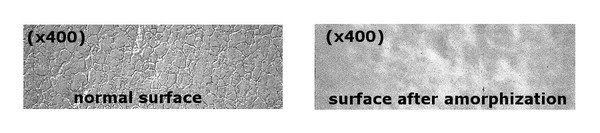
Advantages of amorphisation:
– The growth and spread of bacteria and viruses are significantly inhibited. Furthermore, the surface can easily be examined under a microscope.
– Iron on the surface of the stainless steel is also dissolved. As a result, the top layer becomes richer in chromium and nickel, which contributes to the surface’s refinement and corrosion resistance
- The amorphised surface exhibits a lotus effect with self-cleaning properties: it repels moisture and dirt. This significantly improves cleanability, hygiene and sterility
- Electrolytic amorphisation is a variant of electro-polishing, also known as electrolytic or electrochemical polishing. The final finish here is also the metal itself and therefore cannot flake off. The effect is therefore permanent.
Important: amorphisation does not contain any toxic elements that kill bacteria. The term ‘antibacterial’ — in the sense of being bactericidal — is therefore not strictly applicable. It refers to the significant inhibition of bacterial growth and spread.
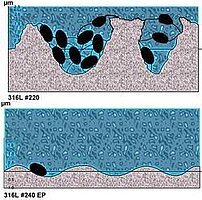
Electrochemical amorphisation was originally developed to prevent microbial corrosion (MIC), biofilm formation (biofouling) and algal growth.
However, any application where bacterial growth needs to be prevented can benefit from amorphisation: hospitals, the food industry, the pharmaceutical sector and cleanrooms. The treatment is EHEDG- and FDA-compliant.
In the healthcare sector, for example, items such as handrails, protective edging, furniture, pipework, air conditioning and heating components, laboratory equipment, cleanroom equipment and test equipment can be treated.